


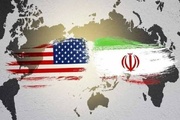
As mentioned, the war waged by the US and Israel against Iran cannot be assessed solely within the framework of a military confrontation or a dispute over Iran’s nuclear program, rather, this war has become a test for gauging limits of American power in one of the world’s most strategically important regions in the West Asia. A test whose outcome could alter the security equations in West Asia as well as the standing of extra-regional powers for years to come. The significance of this development is further underscored by the fact that even some prominent American theorists are speaking of the end of an era in which great powers served as the primary actors in determining the region's fate.
A professor of international relations Stephen Walt at Harvard University and a prominent theorist of the realist school, writes in an article for *Foreign Policy* titled "The Middle East Is Finally Standing on Its Own Two Feet": "The Iran conflict is bringing an end to a century of great-power intervention in the region." Pointing to historical developments in West Asia, he argues that, for the first time since 1919, the region's fate will be determined, more so than in the past, by local actors. Walt views a potential U.S.-Israeli war against Iran as a turning point that has accelerated the decline of foreign-power interventionism.
To understand the significance of this assessment, one must look back at the history of intervention by major powers in West Asia. Following World War I and the collapse of the Ottoman Empire, Britain and France played a decisive role in shaping the regional order by carving out spheres of influence and establishing new political structures. After World War II, the United States gradually replaced these European powers; it sought to maintain control over the region’s security architecture through means such as orchestrating coups, supporting allied governments, selling arms, establishing military bases, and engaging in direct intervention. The 1953 coup against the government of Mohammad Mossadegh, the 1991 Gulf War, and the 2003 invasion of Iraq stand out as key milestones in this process.
However, the experience of the last two decades has demonstrated that military superiority does not necessarily translate into the ability to dictate political outcomes. In Iraq and Libya, the United States failed to establish a stable order aligned with its initial objectives. Similarly, Russia was unable to prevent the collapse of Bashar al-Assad’s government. Despite possessing advanced equipment and receiving extensive arms support, Saudi Arabia failed to eliminate Ansar Allah from the political and military landscape in the war in Yemen. Likewise, Israel, notwithstanding its large-scale military operations, has been unable to completely eradicate Hamas and Hezbollah. In Walt’s view, these developments serve as indicators of the diminishing efficacy of external military power—a reality that the conflict involving Iran has brought into even sharper focus.
In this context, the case of Iran holds a distinct significance. Over the course of several decades, Washington has employed a range of measures—from sweeping economic sanctions and diplomatic pressure to military threats and direct operations—aimed at altering Iran’s behavior or weakening its power structure. Yet, Iran has managed to preserve its political structure while developing substantial missile and drone capabilities, thereby raising the costs of military intervention for the other side. In his article, Walt highlights this very point, arguing that Iran’s ability to withstand prolonged U.S. pressure serves as further evidence of the diminishing effectiveness of foreign intervention.
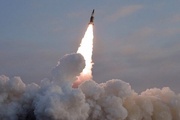
One of the most significant dimensions of this shift is the changing relationship between military expenditure and strategic gain. The development of missile and drone technologies has enabled actors with more limited financial and military resources—compared to major powers—to inflict damage upon military bases and infrastructure. Under such circumstances, even air superiority does not guarantee victory. While airstrikes may destroy infrastructure, altering a nation’s political structure or compelling it to accede to an adversary’s demands is a far more complex undertaking. For this reason, Walt argues that the option of a ground occupation of Iran—given its vast territory, large population, and the United States’ unsuccessful experiences in Iraq and Afghanistan—is strategically prohibitive and unrealistic.
Another factor in Walt’s analysis is the declining relative importance of West Asian energy in the calculations of major powers. The rise in U.S. shale oil production, coupled with the global economy’s gradual shift toward reduced fossil fuel consumption, has diminished the relative dependence of major powers on the region’s energy resources. This development—alongside the rising costs of military intervention—weakens the incentive for a direct presence by foreign powers. Of course, this does not mean that the region’s oil and gas have become insignificant; rather, it reflects a shift in the balance between the economic benefits and the security costs of intervention.

The outcome of these developments could be the emergence of a different order in West Asia—one in which the balance of power among regional states gains greater significance, compelling governments to rely more heavily than before on domestic capabilities and regional arrangements to ensure their own security. Walt even suggests the potential for fluid, shifting coalitions involving Iran, Saudi Arabia, and other regional states—alliances formed not necessarily on the basis of shared ideology, but rather out of the necessity to maintain a balance of power. Furthermore, he identifies the pursuit of independent deterrence—including nuclear deterrence—by certain states as a potential consequence of reduced reliance on the support of external powers.
However, the end of the era of interventionism does not signify the complete removal of foreign powers from the equations of West Asia. The United States, China, and Russia will continue to maintain a presence in the region through economic relations, arms sales, investment, and diplomacy. The core issue is a shift in their status: they are transitioning from actors capable of directly shaping regional dynamics to powers that must, more than ever, factor the will and interests of local actors into their own calculations.
From this perspective, the significance of the conflict involving Iran is not limited merely to its military outcome. This conflict has exposed the gap between U.S. military might and its capacity to impose its political will, while simultaneously raising the cost of maintaining the security order favored by Washington. Should this trend become entrenched, Iran will not only emerge as a key player in the future order of West Asia, but its resistance to foreign military intervention could also play a decisive role in redefining the very concepts of regional power and security. What is currently unfolding is not necessarily a complete U.S. withdrawal from the region; rather, it marks the gradual end of an era in which Washington assumed it could dictate the fate of regional nations and states without regard for their own will.
MNA









Your Comment